

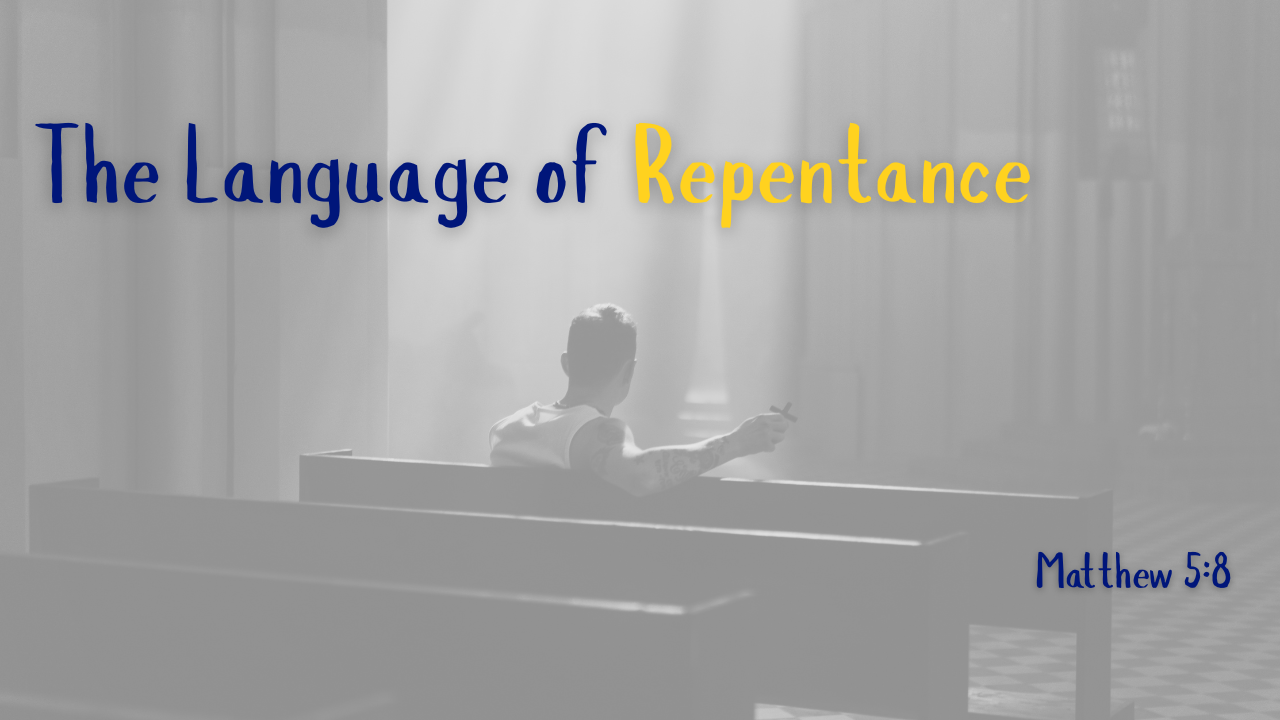

“Blessed are the pure in heart, for they will see God.”
Matthew 5:8 (NET)
While all the beatitudes are challenging, I find this one almost impossibly hard to grasp, let alone to live out. What does it mean to be pure in heart? And how do we know when we’ve become pure in heart? I am a portrait of divided loyalties, affections, desires, anxieties, and ambitions. I am a beautiful mess, a phrase often used in protest against the culture’s shaming of mental health issues.
But while I wholeheartedly affirm the sentiment of being a beautiful mess, when I compare it with Jesus’ blessing of the pure in heart, I can’t help but think I’m missing something. After all, he blessed the poor in spirit, those who mourn, the meek, and those who hunger and thirst for righteousness. Surely, Jesus can’t mean that I need to be morally, mentally, emotionally, or spiritually perfect – without any struggle, temptation, or duplicity – to see God? If that were the case, we would all be hopelessly helpless.
Theologian-philosopher Søren Kierkegaard said that purity of heart is to will one thing. His words from his 1847 work, Purity of Heart Is to Will One Thing: Spiritual Preparation for the Office of Confession, are helpful for our consideration:
Oh Thou that givest both the beginning and the completion, give Thou victory in the day of need so that what neither a man’s burning wish nor his determined resolution may attain to, may be granted unto him in the sorrowing of repentance: to will only one thing.
Kierkegaard doesn’t point to the strength of our ideals, passions, or convictions to define our purity of heart. He points to repentance, our continual recognition and acknowledgment before God of those things that remove God as the true north of our hearts.
While the word “repentance” carries some religious fundamentalist baggage, it is generally a very positive idea. The Hebrew word shuv, meaning “to turn back” or “to turn around,” is covenant-oriented. Yahweh, who rescued his people from the dominion of darkness, has brought us into the kingdom of his beloved Son (Col. 1:13-14). We now belong to him; he is our true King and the lover of his people. In the patronage parlance of the ancient world, Christ is our benefactor, having saved us from a desperate state, restored our welfare, and crowned us with honor. In Ephesians 1, the apostle Paul describes, in magisterial terms, the benefits we have in being in Christ:
Blessed is the God and Father of our Lord Jesus Christ, who has blessed us with every spiritual blessing in the heavenly realms in Christ. For he chose us in Christ before the foundation of the world that we should be holy and blameless before him in love. He did this by predestining us to adoption as his legal heirs through Jesus Christ, according to the pleasure of his will—to the praise of the glory of his grace that he has freely bestowed on us in his dearly loved Son. In him we have redemption through his blood, the forgiveness of our offenses, according to the riches of his grace that he lavished on us in all wisdom and insight. He did this when he revealed to us the mystery of his will, according to his good pleasure that he set forth in Christ, toward the administration of the fullness of the times, to head up all things in Christ—the things in heaven and the things on earth. In Christ we too have been claimed as God’s own possession, since we were predestined according to the purpose of him who accomplishes all things according to the counsel of his will so that we, who were the first to set our hope on Christ, would be to the praise of his glory. And when you heard the word of truth (the gospel of your salvation)—when you believed in Christ—you were marked with the seal of the promised Holy Spirit, who is the down payment of our inheritance, until the redemption of God’s own possession, to the praise of his glory. (Ephesians 1:3-14)
Now, our obligation to our patron is to remain faithful to him: honoring him in all that we do or say (Col. 3:17). But when our hearts drift from him, repentance is an incredibly life-giving act of turning back to the one who loves us and established his covenant with us, enabling us to flourish within the spacious boundaries of his amazing grace.
The language of purity harkens back to the practices of the ancient tabernacle and temple. For the priests to enter the sacred spaces and perform their liturgical duties, they needed to be purified by washing in water, putting on their holy garments, and being anointed (Exodus 40:12-15). This ensured that any contamination from their day-to-day lives was removed so it wouldn’t defile the holy place where God’s presence dwelt in the midst of his people. Only in this way could the priests represent the people before God in their prayers and sacrifices.
In the new covenant in Christ, we take off the old self with all its practices that corrupt and fracture the holy space of the community of Christ, and we put on the holy garment of Christ himself (Col. 3:1-17). Repentance is the continual practice of taking off the old self and putting on the new self, being renewed in the image of its creator (Col. 3:10). It’s being who we are because of what Christ did for us. It’s not adding to it but removing anything that gets in the way of our true identity in Jesus.
This is an essential message for leaders. Leaders are constantly pulled in many directions: the demands of the mission, the needs of their employees and peers, and even their own desires and fears in their leadership. If leaders don’t stay centered on their true north, they are prone to digress into secondary concerns. Staying pure in heart as a leader requires the regular discipline of saturating our hearts and minds with the stories that shape our identity and what we love, the stories of God’s covenant faithfulness, the dreams he has for his people and for your shared mission, and ultimately his story of redeeming love for the whole world. When we immerse ourselves in these stories and in a community that nurtures them, we discover where our interests and directions are misaligned and where we need to repent. I believe one of the hardest things a leader must do is admit, “I was wrong.” But only in the language of repentance does a leader stay pure in heart and see God. Only the meekness and humility of a life-giving leader who takes the hard first steps toward realignment can work like leaven in a clump of dough to form the entire team’s true north.
I came across a LinkedIn post outlining the seven habits of toxic leadership, which I wish to share here. These habits reveal a leader who is not pure in heart and refuses to repent of loves and loyalties that are moving their leadership away from seeing God.
- Lack of Transparency and Honesty: Withholding information, being unclear about decisions, and not communicating openly erode trust and create fear.
- Micromanagement with Low Trust: Controlling every detail, second-guessing capable leaders and teachers, and leaving no room for professional judgment.
- Favoritism and Discrimination: Showing favoritism in assignments, opportunities, or discipline undermines fairness and destroys morale.
- Blame-Shifting and Scapegoating: When problems arise, they blame others instead of addressing root causes or taking responsibility.
- Low Emotional Intelligence: Reacting instead of responding, dismissing concerns, and failing to build strong relationships.
- No Empathy, Integrity, or Humility: Lacking compassion for staff and students, putting ego before purpose, and resisting feedback or accountability.
- Absence of Psychological Safety: Creating a culture where people are afraid to speak up, share ideas, or admit mistakes – stifling growth and innovation.[1]
In the end, purity of heart is not a posture we achieve but a direction we choose again and again, a returning, a re‑turning, a quiet willingness to let God gather the scattered pieces of our divided selves. Repentance becomes the steady work of coming home to the One who has never wavered in covenant loyalty. And so I invite you, as a leader, to practice a regular examen: to sit with these seven toxic habits, to name where they surface in you, and to let the Spirit turn you back toward the one thing worth willing. Not to condemn you, but to make you whole. Not to shame you, but to steady your course. This is the slow, courageous work of becoming pure in heart, leaders who see God more clearly because we are no longer running from the truth within us.
[1] Norris, M. (2024, April 25). Seven Habits of Toxic Educational Leadership [LinkedIn post]. LinkedIn. https://www.linkedin.com/feed/update/urn:li:activity:7453652936930525184/
